Types of places
Community College Fab Labs
Updated June 11, 2026
The best-equipped, best-instructed, cheapest tool access in most American cities isn't a makerspace — it's the community college across town. The catch is that access comes packaged as enrollment, and the quality of the deal varies by campus. Here's how to evaluate it.
What you actually get
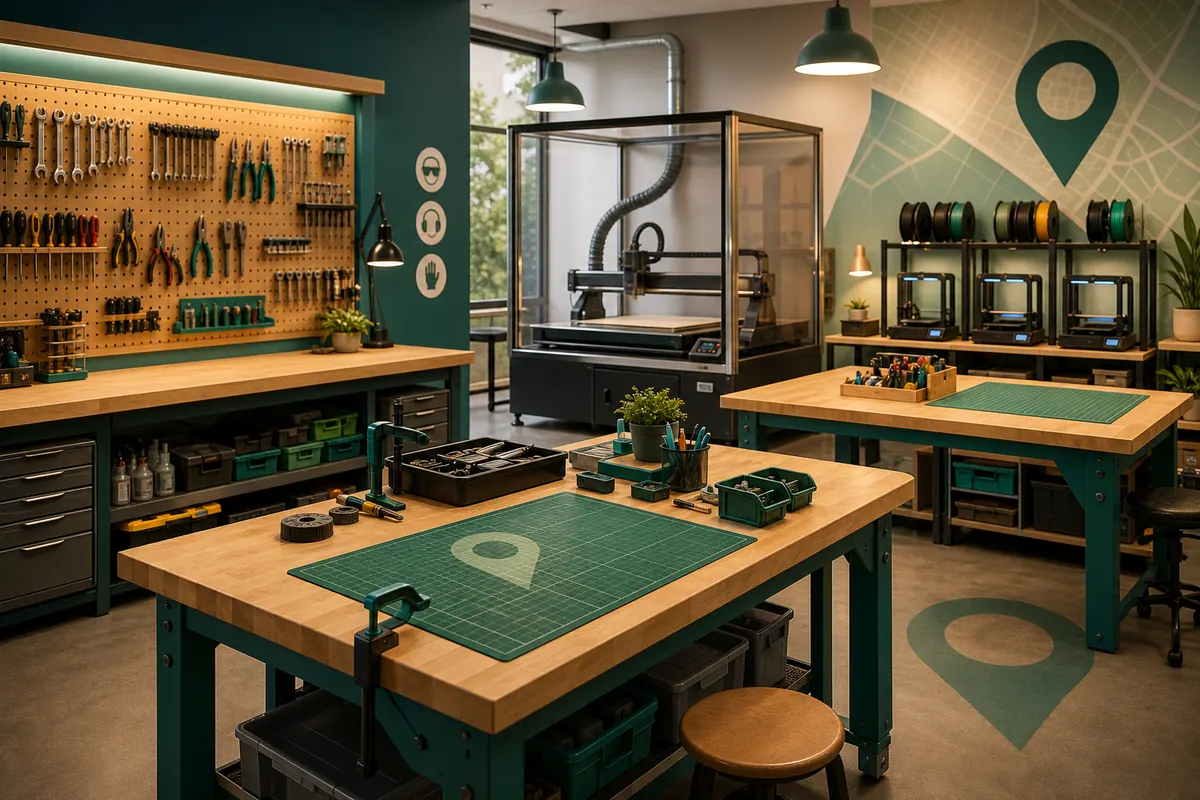
Depending on the campus: full woodshops, welding bays, machine shops with manual and CNC mills, electronics labs, fashion labs with industrial machines, and digital fab labs with laser cutters and 3D printers. The equipment is often industrial-grade — better than most private makerspaces — and it comes with the thing makerspaces can't sell you: a trained instructor watching you work for an entire semester.
The access models, best to worst
- Noncredit / community education classes — short courses open to anyone, no degree intentions needed, often cheap. The ideal “I just want shop access with instruction” path.
- Credit courses — enroll in Woodworking 101 or Welding 1 like any student. More paperwork, more weeks, more skill at the end. California residents pay famously low per-unit rates.
- Open lab hours for enrolled students — many programs add practice hours outside class time. Ask, because it multiplies the value of any class.
- Community access programs — a minority of campuses open fab labs to the public on certain days or through membership-like programs. Rare but worth one phone call to find.
The five questions to ask the department
- Can I take this without pursuing the degree? (Usually yes.)
- Are there open lab hours beyond class meetings, and when?
- What can I use after the course ends? (Often: nothing — plan accordingly.)
- Do projects have to be course assignments, or can I build my own?
- What's the real total: fees, materials, parking, health fee?
Who this path fits — and who it doesn't
Great fit: beginners who want real instruction, anyone pursuing welding/machining/cabinetmaking skills, budget-conscious makers, people whose project list can wait for a semester rhythm. Poor fit: you need access this week, your projects can't follow a syllabus, or evening-only availability collides with the class schedule. In those cases a makerspace membership or class fits better — and many makers do college-for-skills first, makerspace-for-access after, which is the strongest combination available. It also makes you exactly the member every shop wants: see shared tool etiquette.
Frequently asked questions
Can I use a community college fab lab without being a student?
Sometimes — through noncredit community education classes (the easy door) or, at a few campuses, public access programs. Most machine access does require enrolling in something, but “something” can be a cheap short course.
How much does community college shop access cost?
Noncredit short courses commonly run $50–$300. Credit courses cost per-unit rates (very low for California residents) plus materials. Either way it usually undercuts months of private membership — with instruction included.
Is the equipment actually good?
Often better than private makerspaces — career-technical programs buy industrial machines and maintain them on real budgets. Welding bays and machine shops especially tend to outclass anything membership money can reach.
Can I work on my own projects in class?
Depends on the instructor and course. Beginner courses usually follow set projects; advanced and community-ed courses often allow personal work. Ask before enrolling — it's a standard question and instructors answer it honestly.