Tool access
Electronics Benches and Soldering Labs
Updated June 11, 2026
Electronics is the cheapest maker discipline to start at home — a soldering iron costs less than dinner. What shared benches actually offer is the expensive stuff: oscilloscopes, bench supplies, hot-air rework, and the person at the next bench who's debugged your exact problem before.
Where shared benches live
- Hackerspaces — the spiritual home of shared electronics. Usually the best test equipment, the deepest parts bins, and members who do this professionally. Culture skews informal; show up on an open night.
- Makerspaces — most have an electronics corner: soldering stations, multimeters, sometimes a scope. Quality varies more than woodshops do — inspect before counting on it.
- Repair cafés and fix-it clinics — free recurring events where volunteers help repair broken electronics. The single best free way to learn soldering and debugging on real problems.
- College and library programs — intro electronics and microcontroller courses (often built around Arduino) include lab access; some libraries lend soldering kits or host solder-along events.
- Robotics clubs — see robotics labs and clubs; teams always have benches and always welcome people who show up consistently.
How to judge an electronics bench in 60 seconds
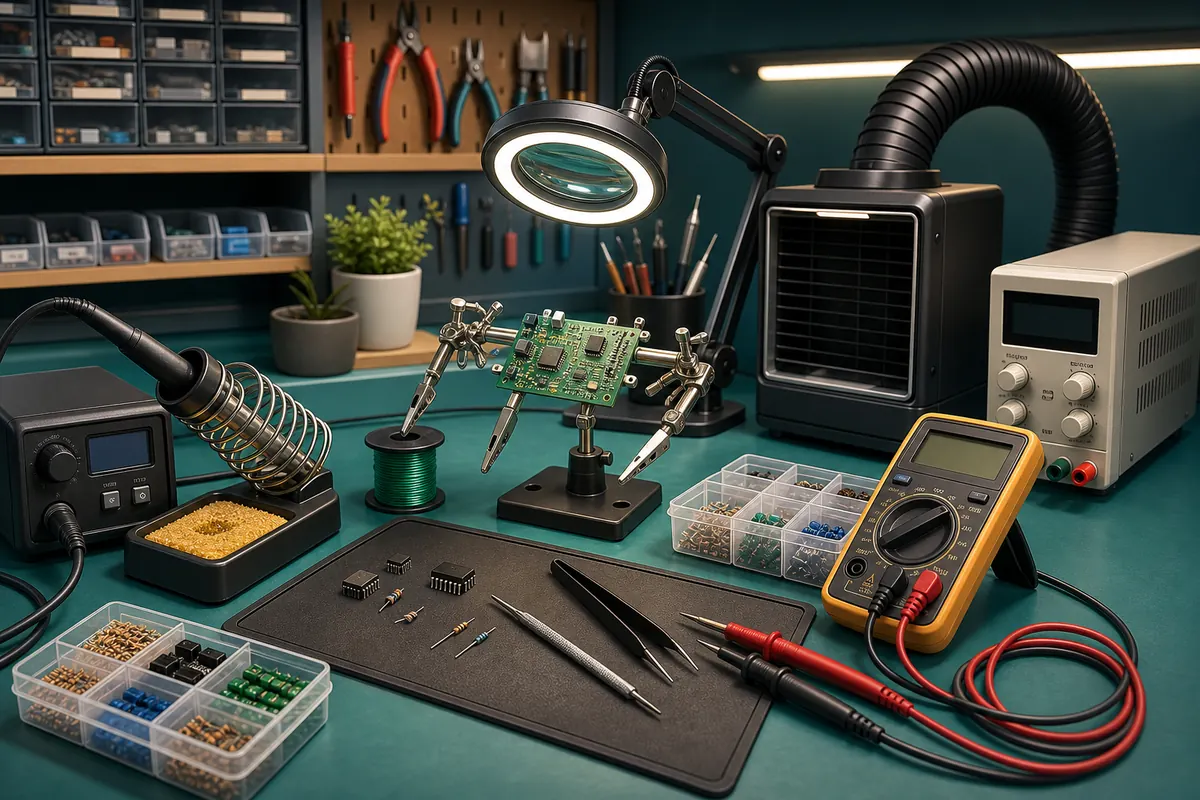
Look for: temperature-controlled soldering stations (not firestarter wands), working fume extraction at each seat, a scope and bench power supply that actually power on, organized component storage, and ESD mats if anyone does sensitive work. A drawer of mystery parts and one communal iron with a corroded tip means the bench is decorative.
The community is the equipment
More than any other shared tool, the value of an electronics bench is the people. Debugging is pattern recognition, and borrowed pattern recognition is the fastest kind. One experienced member glancing at your board — “your ground isn't connected” — saves the evening you'd have spent finding it alone. When you tour, ask when the electronics regulars actually show up, and visit then.
What to learn first, in order
- Soldering and desoldering — one evening at a repair café or solder-along gets you functional.
- Multimeter basics — continuity, voltage, resistance. This is 80% of debugging.
- A microcontroller ecosystem — Arduino or Raspberry Pi Pico; tutorials are endless and shared-bench help is everywhere.
- Reading schematics — learn as you build kits; it arrives on its own.
Frequently asked questions
Should I learn electronics at home or at a shared bench?
Both, in that order: a $30 starter kit at your kitchen table for basics, then a shared bench when you need test equipment or hit a problem you can't see. The expensive instruments and the experienced eyes are what membership buys.
What is a repair café?
A free recurring community event where volunteers fix broken household items — and teach you while doing it. Bringing a dead toaster to a repair café is genuinely one of the best free electronics lessons available.
Do makerspaces teach soldering?
Most run intro soldering workshops every month or two, typically $10–$50 including a kit you assemble. It's also the lowest-commitment way to see the space and meet members before considering membership.
What's the minimum kit to own?
A temperature-controlled iron, brass-wool tip cleaner, flush cutters, a basic multimeter, and solder. Under $80 total, fits in a shoebox, and covers everything until you need a scope — which is exactly when the shared bench comes in.