Orange County
Where to Use a Laser Cutter Near Orange County
Updated June 11, 2026
You don't need to buy a laser to cut your first project. Around Orange County, laser access hides in member makerspaces, college fab labs, a few library programs, and paid cutting services. Here's how to pick the right one — and when owning a machine starts to make sense.
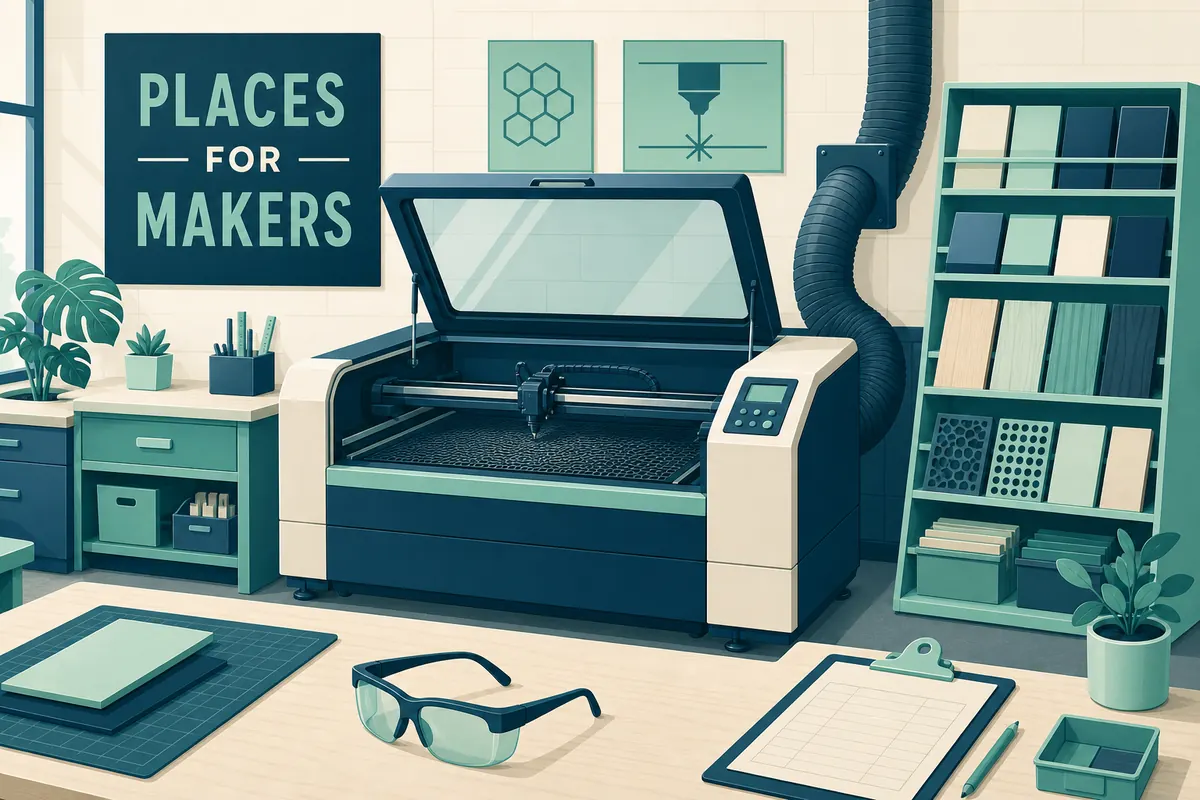
Your four access paths near OC
| Path | Typical cost | Best for |
|---|---|---|
| Member makerspace | $50–$200/mo + sometimes laser time fees | Regular projects, learning the full workflow |
| College fab lab class | Course fees (often under $200/semester) | Learning design-to-cut properly, semester projects |
| Library maker lab | Free–cheap | Small one-off cuts and engraves where offered |
| Paid cutting service | Per job | One-time jobs, production runs, no learning curve needed |
Questions specific to laser access
Before booking or joining, ask:
- What's the bed size and wattage? A 12×20" 40–60W CO2 machine covers most hobby work; bigger signs need bigger beds.
- What materials are allowed? Every shop bans PVC and chlorinated plastics (the fumes are corrosive and toxic). Many restrict unknown or reclaimed materials entirely.
- Is training required, and how soon can I take it? A laser checkout class with a waitlist quietly delays your project by weeks.
- How is time booked and billed? Some spaces include laser time in dues; others meter it per minute.
Our general laser access guide covers the full checklist.
When buying your own starts to win
If you're booking laser time more than a few times a month, doing production work for a shop or Etsy store, or constantly fighting reservation calendars, run the numbers on ownership — honestly, including ventilation. Desktop diode and CO2 machines like the FoxAlien laser engravers have made home setups realistic for engraving and thin-stock cutting, but you take on exhaust, fire safety, and maintenance yourself. Our guide to shared access vs. buying a laser walks through the real math, and The Maker Guide's laser section has machine-level buying research.
Make your first session count
Show up with a vector file in the shop's preferred format (ask — usually SVG, DXF, or AI), material you bought from their approved list or their own stock, and dimensions checked twice. First sessions burn time on file setup; arriving prepared turns a frustrating hour into a finished project.
Frequently asked questions
Can I use a laser cutter for free near Orange County?
Sometimes — a few library programs in and around the county have offered laser access with a class or certification. Availability changes; call your branch. Otherwise, college fab lab classes are the lowest-cost trained access.
What materials can I bring to a shared laser?
Plywood, solid wood, acrylic, leather, paper, and cardboard are commonly allowed. PVC and vinyl are banned everywhere (toxic, machine-destroying fumes). Most shops require material from an approved list — ask before you buy stock.
Should I just buy a cheap diode laser instead?
If you mostly engrave and cut thin material, a desktop diode machine such as a FoxAlien can pay for itself quickly — but you must handle ventilation and fire safety at home. For thick cuts and big sheets, shared CO2 machines still win. Full breakdown: makerspace laser or buy one?
How do laser time fees usually work?
Three common models: included in membership, billed per minute of cutting, or sold in blocks. Per-minute billing favors engraving-light jobs; block time favors batch production. Ask which model a space uses before comparing prices.