Safety
Makerspace Safety Basics
Updated June 11, 2026
Shared shops are statistically safe places — because the good ones are obsessive about the things this guide covers. Learn the universal rules once and every makerspace, fab lab, and college shop you ever enter will feel familiar.
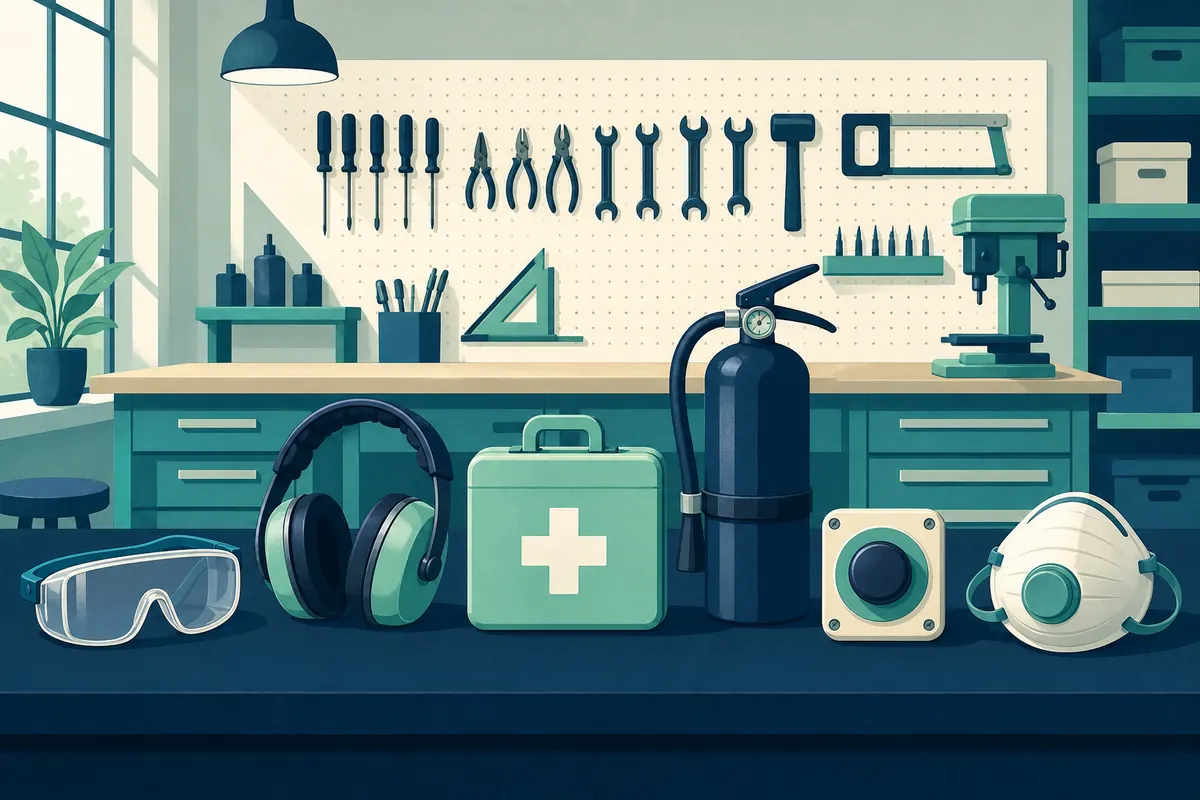
The universal rules (every shop, every tool)
- Eyes, always. Z87-rated glasses from door to door, not machine to machine. Chips fly farther than you think.
- No loose anything. Sleeves, hair, jewelry, hoodie strings, gloves near rotating tools — rotation grabs and does not let go.
- Never work alone on dangerous machines. Most shops formalize this; respect it even where they don't.
- Don't touch what you're not trained on. Checkout requirements are the system working, not bureaucracy.
- Tired, rushed, or upset = done for the day. Nearly every shop injury story includes one of those three words.
- When something goes wrong, say so. Report near-misses and broken tools. The member who red-tags a saw saves the next person's fingers.
Know your top three hazards by area
| Area | The hazards that matter most |
|---|---|
| Woodshop | Table saw kickback, jointer/planer hands, fine dust in lungs (more) |
| Laser | Fire (never unattended), toxic materials (no PVC, ever), fumes (more) |
| Metal | Arc eye, grinding sparks meeting flammables, hot work after-hours (more) |
| Electronics | Solder fumes, hot iron burns, mains-voltage projects (more) |
| CNC | Workholding failures throwing stock, bit shrapnel, trusting the machine too much (more) |
How to read a shop's safety culture in five minutes
Strictness is hospitality. A shop that makes you take a table-saw checkout loves your fingers more than your money. Look for: members wearing PPE unprompted, guards installed rather than 'around somewhere,' a current first-aid kit, red-tagged broken tools, and zero eye-rolling when someone asks a basic question. The full observation list is in the tour checklist.
Your first weeks: the beginner's protocol
- Take the orientation seriously — even the parts that feel obvious.
- Ask for a demonstration before your first solo run on anything. Experienced members like being asked.
- Narrate your plan to someone: 'I'm going to rip this board with the fence here.' Bad plans sound bad out loud.
- Start with soft, forgiving materials — pine before purpleheart, cardboard before acrylic.
- Learn where the E-stops, extinguisher, and first aid live before you need them.
And before any visit, read how to prepare for your first session — preparation is most of safety.
Frequently asked questions
What safety gear do I need to bring versus what shops provide?
Bring your own eyes and ears: Z87 glasses and hearing protection are personal gear at nearly every space. Shops provide machine guards, push sticks, fire equipment, and first aid. Dust masks/respirators are personal too — fit matters.
Are makerspaces actually dangerous?
Well-run ones have strong safety records — training requirements, maintained machines, and people around are all protective. The risk profile is mostly determined by culture, which is exactly what you should evaluate before joining.
What's the most commonly violated rule?
Eye protection 'just for one quick cut.' Second place: gloves worn near rotating tools (they catch and pull — gloves are for material handling, never for machining). Both are habits; build the right ones early.
I saw another member doing something unsafe. Do I say something?
Yes — a quiet 'hey, your guard's off' is shop culture working. If it's recurring or you're not comfortable, tell staff. Every good shop wants that report; it's in the etiquette.